

ІМПУЛЬС-ІВЦ

IT Infrastructure for Business

IT infrastructure as the foundation of stable business operations

IT infrastructure is a critical element of any company, ensuring the operation of servers, networks, software and access to data.

The speed of systems, information security and the ability to scale the business without failures or losses depend on its quality.

For flexible scaling, see cloud solutions.
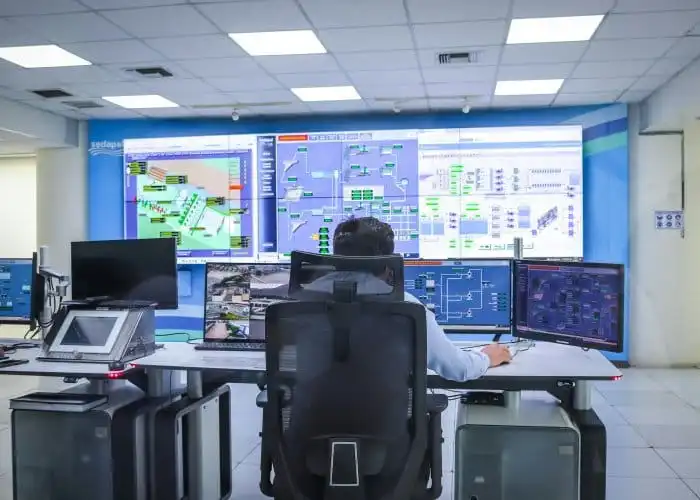
enterprise IT infrastructure

What is included in IT infrastructure

Servers

Processing and storage of business data

Network

Local and remote connections

Workstations

Computers and access to systems

Storage

Databases and backup

Security

Access and data protection

Integrations

Work with systems and BAS solutions

Why IT infrastructure is critically important

Infrastructure problems directly affect business: work delays, failures, data loss and financial losses.

Without a properly built system, even modern software does not deliver results and creates additional risks.

Before modernization, it is important to carry out an IT readiness assessment.

business infrastructure

What the company receives

  • stable system operation without failures
  • fast access to data
  • information protection
  • readiness for scaling
  • control of IT processes

How IT infrastructure is built

Audit

Analysis of the current state of systems

Design

Architecture development

Procurement

Selection of equipment and solutions

Implementation

Configuration and launch

Testing

Stability testing

Support

Monitoring and development

When infrastructure needs to be updated

If systems work slowly, failures occur or the business is growing, this is a direct signal that the current infrastructure no longer meets business needs.

Ignoring these signals leads to loss of efficiency and higher costs in the future.

To improve stability, use guaranteed IT infrastructure.

Build stable IT infrastructure

Get a solution tailored to your business

Result for business

  • no downtime
  • reduced risks
  • fast system performance
  • business scaling
  • cost control

Benefits for roles

Manager

Controls business stability and development

IT department

Works with managed infrastructure

Team

Works without failures or delays
  1. How to understand that the infrastructure needs to be updated?
    The main signs are slow systems, frequent outages, data access issues, or difficulty scaling as your business grows. If IT is struggling to keep up or is holding back business growth, it’s a clear signal to upgrade. Ignoring these issues usually leads to higher costs in the future.
  2. Can infrastructure be built gradually?
    Yes, infrastructure can be implemented in stages, but it is critical to design the architecture correctly at the start. This helps to avoid system incompatibility, unnecessary costs, and repeated implementations. A staged approach is especially relevant for businesses that are growing and do not want to invest large budgets at once.
  3. Which is better, on-premises infrastructure or the cloud?
    The choice depends on the business objectives. On-premises solutions provide maximum control and are suitable for specific security requirements. Cloud solutions provide flexibility, scalability and fast start-up. In most cases, a combined approach that combines the advantages of both options is optimal.
  4. What result does the company get after building the infrastructure?
    The company gets stable systems, fast data access, reduced risk of failures, and the ability to scale without technical limitations. This allows you to focus on business development rather than solving technical problems, and increases overall work efficiency.